
Which roofing material is better for a home in Pittsford, NY?
Neither asphalt shingles nor metal roofing is automatically the better choice for every home. Asphalt shingles usually offer a lower initial cost and a familiar appearance, while metal roofing generally provides longer service life, stronger resistance to some weather conditions, and less frequent replacement.
For homes in Pittsford, the most useful comparison involves more than purchase price. Snow, freeze-thaw cycles, summer heat, wind, roof slope, attic ventilation, neighborhood character, and the expected length of time in the home can all affect the decision.
How do asphalt shingles and metal roofing differ?
Asphalt shingles are layered roofing products made with a fiberglass mat, asphalt coating, and protective mineral granules. They are installed in overlapping courses and are available in many colors and profiles.
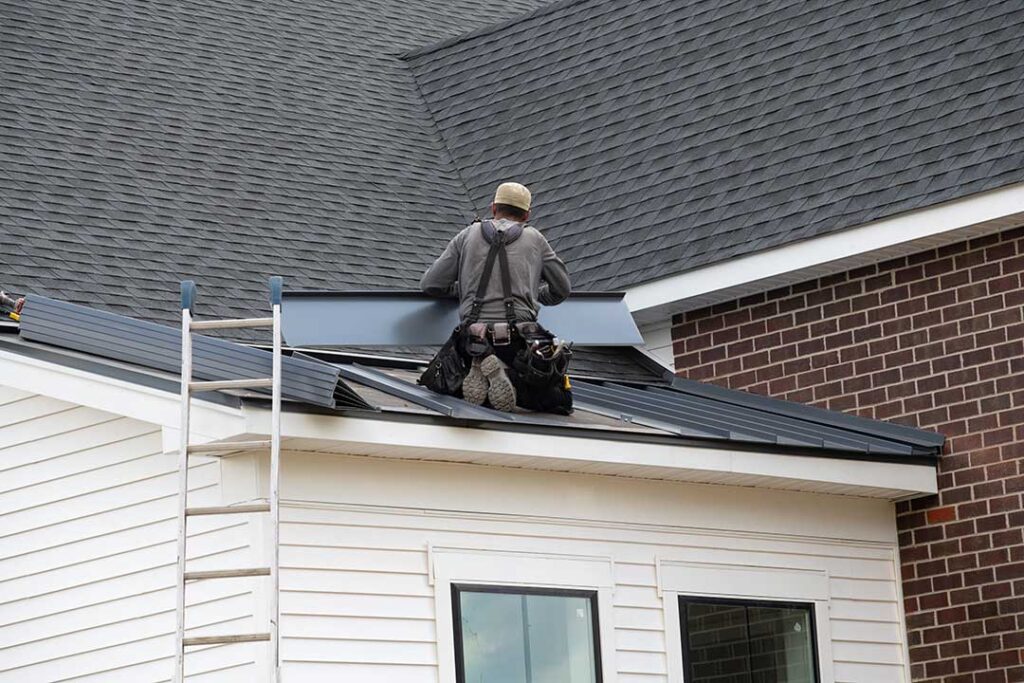
Metal roofing is made from panels or interlocking pieces, commonly using coated steel or aluminum. Some systems resemble traditional shingles, while others have long vertical seams or a more architectural appearance.
The main differences are:
- Initial cost: Asphalt shingles typically cost less to install.
- Service life: Standard asphalt shingles often last roughly 15 to 25 years, while higher-grade products may last longer under favorable conditions. Many properly installed metal roofs can remain serviceable for 40 to 70 years or more.
- Weight: Metal is generally lighter than many layered roofing systems, although the existing roof structure still needs to be evaluated.
- Maintenance: Both materials need periodic inspection, but metal usually has fewer granules to lose and does not decay.
- Appearance: Asphalt offers a traditional residential look. Metal can appear modern, rustic, or similar to other roofing materials depending on its profile.
- Repair approach: Individual asphalt shingles can often be replaced relatively simply. Metal repairs may require matching panels, fasteners, coatings, or specialized techniques.
Which roof handles snow and ice better?
Both materials can perform well in winter when the roof is properly designed, installed, and ventilated. Metal roofing sheds snow more readily because of its smooth surface, especially on steeper slopes. That can reduce prolonged snow loading, but it also creates a potential hazard when snow slides suddenly near entryways, walkways, decks, or lower roofs.
Asphalt shingles provide more friction, so snow generally stays in place longer. That can be beneficial near doors and pedestrian areas, although accumulated snow still adds weight and may contribute to ice dams if attic insulation, air sealing, or ventilation is inadequate.
Neither roofing material prevents ice dams by itself. Ice dams form when heat escaping from the living space warms portions of the roof, causing snow to melt and refreeze near colder eaves. Adequate attic insulation, proper air sealing, balanced ventilation, and correctly installed underlayment are more important than the roof covering alone.
Are metal roofs noisier during rain?
Metal roofing can sound louder during heavy rain or hail, particularly when installed over open framing without a solid deck or adequate insulation. On a typical home with a roof deck, underlayment, insulation, and finished ceilings, the difference is often much less noticeable than people expect.
Asphalt shingles naturally dampen some sound because of their layered composition and granular surface. Noise concerns should be evaluated based on the entire roof assembly rather than the outer material alone.
Which option performs better in summer?
Metal roofing can reflect more solar radiation than dark asphalt shingles, particularly when it has a light-colored or reflective finish. This may reduce heat absorption through the roof during sunny weather.
Asphalt shingles can also perform well when the attic is properly insulated and ventilated. The color, shingle design, roof orientation, attic insulation, and air movement beneath the roof all influence indoor temperatures. A reflective metal roof is not a substitute for correcting inadequate insulation or blocked ventilation.
Is metal roofing more resistant to wind, fire, and hail?
Metal roofing has strong fire resistance and can be highly resistant to wind when the panels, seams, edges, and fasteners are correctly specified and installed. Its performance varies considerably by product and installation method.
Asphalt shingles also come in products designed for improved wind and impact resistance. Their performance depends on the shingle grade, fastening pattern, roof shape, age, and exposure to weather.
Hail can damage either material. Metal may dent, while asphalt shingles may lose granules, crack, or develop hidden mat damage. A dented metal panel is not always a structural failure, and a shingle that looks acceptable may still have impact damage. After a severe storm, inspection should focus on the entire roof system, flashing, vents, gutters, and exposed edges.
Which roof is easier to repair?
Asphalt shingles are widely used, so replacement materials and repair methods are familiar. Minor damage can often be isolated to a small area, provided matching shingles are available and the surrounding roof remains sound.
Metal roofing repairs depend on the system. Standing-seam panels, exposed-fastener panels, and metal shingles have different repair requirements. A damaged panel may be more difficult to match if the original finish has faded or the product is no longer available.
Metal roofs can also experience problems unrelated to the panels themselves, including loose fasteners, failed sealants, blocked drainage paths, or improperly installed accessories. Regular inspection helps identify these issues before water reaches the roof deck or interior.
Does metal roofing cost more over the life of the roof?
Usually, metal roofing has a higher initial installation cost than asphalt shingles. The long-term comparison depends on maintenance, repairs, energy use, replacement timing, and how long the property is occupied.
A homeowner expecting to remain in the same house for several decades may value avoiding one or more future tear-offs. Someone planning to move sooner may place greater weight on initial cost, appearance, and compatibility with the existing roof.
The lowest-priced option is not necessarily the least expensive over time. Installation quality, ventilation, flashing, underlayment, and drainage details can have as much effect on durability as the visible roofing material.
What should homeowners check before choosing?
The existing roof and attic should be considered first. Useful questions include:
- Is the roof deck dry, solid, and free of widespread rot?
- Are there signs of poor attic ventilation or moisture?
- Is the roof steep enough for the selected material?
- Will the new roof be installed over the existing layer or require removal?
- Are flashing details around chimneys, walls, skylights, and roof valleys being addressed?
- Could snow sliding from a metal roof create a safety problem?
- Does the material suit the home’s architecture and surrounding neighborhood?
- Are replacement components likely to remain available?
- Do local building requirements, manufacturer instructions, or neighborhood rules affect the choice?
Roof replacement is also a good time to examine insulation, attic air leakage, chimney flashing, gutters, and areas where roof runoff may freeze or collect.
Which material makes sense for most households?
Asphalt shingles are often the practical choice for homeowners seeking a conventional appearance, lower upfront cost, broad material availability, and straightforward repairs. They can provide reliable service when installed over a sound roof structure with good ventilation and proper flashing.
Metal roofing may be a better fit for homeowners prioritizing long service life, lighter weight, fire resistance, reduced granule loss, or a roof designed to remain in place for many decades. Its higher initial cost and different snow-shedding behavior should be part of the decision.
For local homes exposed to repeated freeze-thaw cycles, winter snow, summer sun, and occasional strong storms, the quality of the complete roofing system matters more than the label on the material. Both options can work well when the design, installation, drainage, ventilation, and maintenance are appropriate for the house.
